Do I Really Need a Fall HVAC Tune-Up in North Texas?
Yes, a fall HVAC tune-up is recommended for North Texas homes because it helps prepare the heating system for colder weather, identify developing problems, maintain efficient operation, and reduce the risk of an unexpected breakdown. ENERGY STAR recommends annual pre-season HVAC checkups, with heating equipment inspected in the fall before winter demand begins.
After months of keeping up with the Texas heat, your HVAC system deserves some attention before the heating season arrives. At Williams Air, we help homeowners keep their heating and cooling systems dependable through seasonal maintenance, professional HVAC service, and repairs when something is not working as it should. A fall tune-up gives a technician an opportunity to inspect your system before you depend on it during the first cold snap. More importantly, it gives you time to address potential issues on your schedule rather than discovering them when the house is already cold. For homeowners looking for dependable comfort and fewer surprises, preventative HVAC maintenance is a practical part of preparing for fall and winter.
Why Fall HVAC Maintenance Matters Before Winter
Fall is an ideal time for HVAC maintenance because your heating equipment can be inspected before its period of heavier use. ENERGY STAR specifically recommends having heating systems checked in the fall, noting that HVAC contractors tend to become busier once winter arrives.
The timing is especially useful in North Texas. According to National Weather Service Dallas/Fort Worth climate normals for 1991 to 2020, DFW’s normal high drops from 78.4°F in October to 66.6°F in November, while the normal low falls from 57.1°F to 46.2°F.
That transition means homeowners can go from relying on air conditioning to needing heat relatively quickly. Scheduling HVAC service during the milder fall weather helps make sure the system is ready before those colder nights arrive.
What Does a Fall HVAC Tune-Up Include?
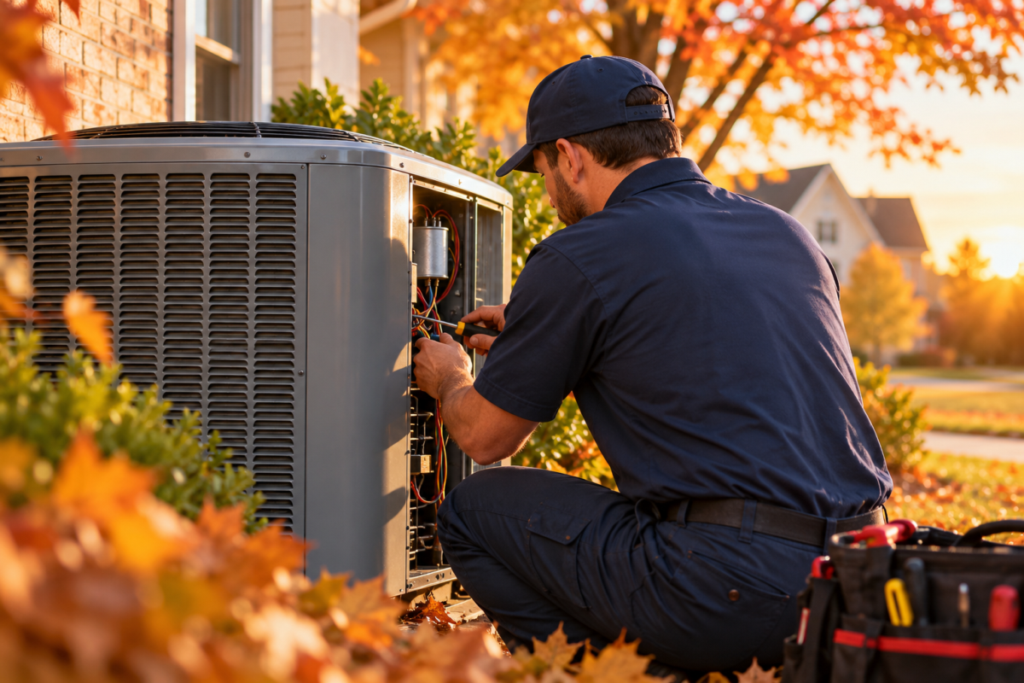
A professional fall HVAC tune-up should focus on safe operation, system performance, airflow, controls, and the components responsible for heating your home.
ENERGY STAR’s residential maintenance checklist recommends that a professional check items such as:
- Thermostat settings and operation
- Electrical connections
- Voltage and current on motors
- Moving components that require lubrication
- System controls and startup cycles
- Condensate drainage
- Blower components and airflow
For combustion heating equipment, ENERGY STAR also recommends inspecting gas connections, gas pressure, burner combustion, and the heat exchanger. These checks are particularly important because problems involving combustion equipment can affect both performance and safe operation.
The exact maintenance steps will depend on whether your home uses a furnace, heat pump, or another HVAC configuration. A professional HVAC contractor can tailor the inspection to the equipment installed in your home.
Can a Fall Tune-Up Help Prevent Heating Repairs?
A tune-up cannot guarantee that your system will never break down, but routine maintenance can uncover problems before they turn into larger HVAC repairs.
ENERGY STAR identifies dirt and neglect as leading causes of heating and cooling system inefficiency and failure. It recommends annual pre-season checkups to keep equipment performing properly and help prevent future problems and unwanted costs.
During fall maintenance, a technician may discover issues such as restricted airflow, worn components, electrical problems, dirty equipment, or improper system operation. Catching these concerns while the weather is mild gives you more time to make repairs before you urgently need heat.
This can be especially helpful for an older system or one that showed warning signs during the previous heating season.
Does HVAC Maintenance Help With Energy Efficiency?
Proper HVAC maintenance can support efficient operation by helping your system move air freely and operate as intended.
Heating and cooling account for nearly half of the energy used in a typical home, according to ENERGY STAR. The organization recommends yearly HVAC tune-ups to improve efficiency and comfort.
Homeowners also play an important role. One of the simplest things you can do is regularly check the HVAC filter. ENERGY STAR recommends checking filters monthly, particularly during periods of heavy winter and summer use, and changing them when dirty. At a minimum, filters should generally be changed every three months. A dirty filter restricts airflow and makes the HVAC system work harder.
Fall is also a good time to:
- Replace a dirty HVAC filter
- Make sure supply and return vents are unobstructed
- Clear leaves and debris away from outdoor equipment
- Test your thermostat before colder weather arrives
- Pay attention to unusual sounds or odors when the heat first runs
These simple steps complement professional HVAC maintenance and can help your system operate more effectively.
How Do You Know Your HVAC System Needs Service Before Winter?
If your heating system is behaving differently than it did last season, schedule service rather than waiting for colder weather to see whether the problem gets worse.
Common warning signs include:
- The heater struggles to reach the thermostat setting
- Some rooms remain noticeably colder than others
- The system cycles on and off unusually often
- Airflow from the vents seems weak
- The system makes new or unusual noises
- Your energy usage increases without an obvious explanation
- The furnace or heat pump has needed frequent repairs
- The system does not start reliably
Some odors can occur when a heating system runs for the first time after sitting unused, but persistent burning, electrical, or unusual odors should not be ignored.
A fall inspection can help determine whether the issue calls for routine maintenance, heating repair, or a conversation about HVAC replacement for an aging system.
Fall HVAC Tune-Up FAQs
How often should an HVAC system be tuned up?
ENERGY STAR recommends annual pre-season checkups, with cooling equipment checked in the spring and heating equipment checked in the fall. Regular maintenance helps support performance and allows developing problems to be identified before peak seasons.
What month is best for a fall HVAC tune-up?
Early to mid-fall is generally a convenient time because it allows you to service your heating system before consistently colder weather arrives. In North Texas, October and November mark a significant seasonal decline in normal temperatures, according to National Weather Service climate normals.
Do heat pumps need fall maintenance too?
Yes. Heat pumps provide both cooling and heating, so seasonal maintenance can help ensure the system is ready to transition into heating operation. ENERGY STAR recommends routine professional maintenance for heating and cooling equipment, including heat pumps.
Can I do an HVAC tune-up myself?
Homeowners can handle basic tasks such as replacing filters, keeping equipment clear of debris, and making sure vents are unobstructed. A complete tune-up should be performed by a qualified HVAC professional who can inspect electrical, mechanical, airflow, and heating-specific components.
Get Your North Texas Home Ready for Cooler Weather
A fall HVAC tune-up is a relatively simple way to prepare your home before heating season begins. Instead of waiting for the first cold night to discover a problem, preventative maintenance gives you an opportunity to check system performance, address potential repairs, and head into winter with greater confidence in your home’s comfort.
Ready to get your HVAC system prepared for fall and winter? Contact Williams Air today to schedule your HVAC maintenance service.