
Why Does My Home Still Feel Hot Even When the AC Is Running?
If your home still feels hot while the AC is running, the problem may be restricted airflow, leaky ductwork, inadequate insulation, air leaks, thermostat issues, low refrigerant, dirty components, or an air conditioner that is improperly sized or no longer performing efficiently. In many cases, the AC is operating, but it is not removing heat or distributing cool air effectively enough to keep the home comfortable.
At Williams Air, we know that a running air conditioner does not always mean a comfortable home. When cooling problems develop, finding the actual cause is more important than simply lowering the thermostat. Our team takes a whole-home approach to comfort, looking at the HVAC system, airflow, ductwork, insulation, and other factors that can affect indoor temperatures. Whether your home needs AC repair, HVAC maintenance, duct improvements, insulation, or a system evaluation, Williams Air can help identify the problem and recommend a practical solution.
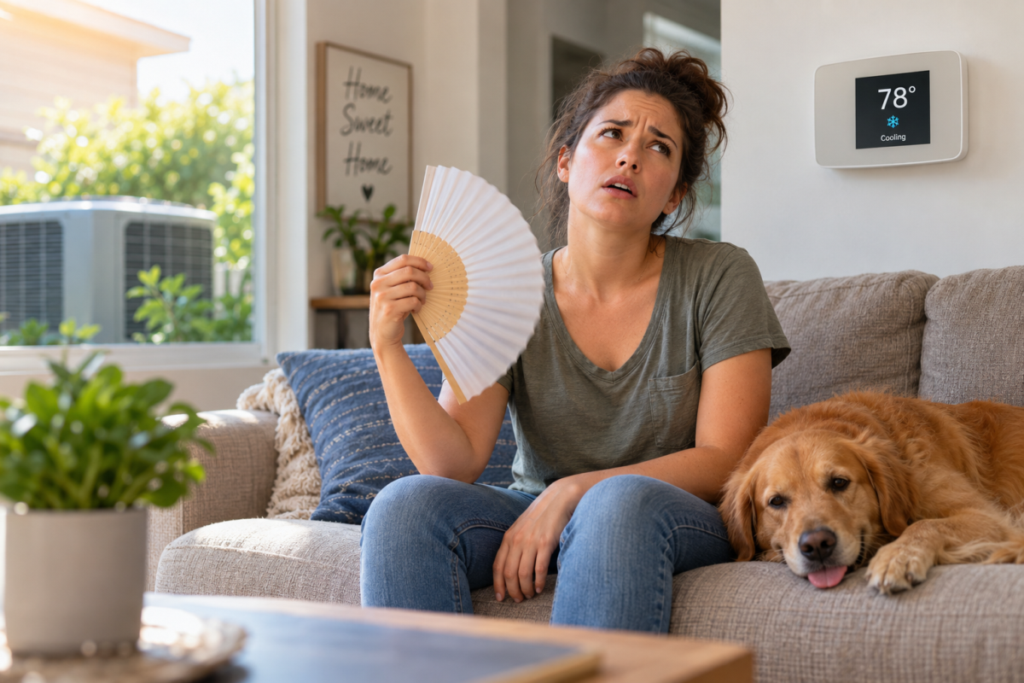
Common Reasons Your AC Is Running but Your House Is Still Hot
When an air conditioner runs continuously but struggles to cool the house, there is usually a problem with either heat removal, airflow, or the home’s ability to keep conditioned air inside. In some cases, several smaller problems combine to make the home uncomfortable.
Understanding these common causes can help you determine whether you need a simple maintenance fix or professional air conditioning repair.
Why Is My AC Running but Not Cooling the House?
Poor airflow is one of the first things to check when your AC is running but the house is not getting cool. A clogged air filter can restrict the amount of air moving through the HVAC system, reducing its ability to cool your home effectively.
The U.S. Department of Energy recommends checking HVAC filters regularly because dirty filters restrict airflow and force heating and cooling equipment to work harder.
Homeowners can start with a few simple checks:
- Inspect the HVAC filter and replace it if it is dirty.
- Make sure supply vents and return grilles are not blocked by furniture, rugs, or other objects.
- Check whether airflow feels noticeably weaker in certain rooms.
- Make sure the thermostat is set to “cool” and the temperature setting is below the current indoor temperature.
If airflow remains weak after these checks, the system may have a blower problem, dirty evaporator coil, damaged ductwork, or another issue that requires professional AC service.
Could Leaky Ductwork Be Making My House Feel Hot?
Yes. Leaky, disconnected, or poorly insulated ductwork can prevent cooled air from reaching the rooms where you need it.
According to ENERGY STAR, a typical home’s duct system can lose about 20 to 30 percent of the air moving through it because of leaks, holes, and poorly connected ducts. Those losses can contribute to higher energy bills and rooms that remain uncomfortable regardless of the thermostat setting.
Duct problems are especially important when ducts travel through hot attics, garages, crawlspaces, or other unconditioned areas. Signs of possible duct problems include:
- One or more rooms that are consistently warmer than others
- Weak airflow from certain vents
- Unusually high cooling bills
- Long AC cycles
- Visible damaged, disconnected, crushed, or kinked ducts
ENERGY STAR notes that properly sealing and insulating ductwork can improve heating and cooling efficiency by as much as 20 percent, and sometimes more.
Can Poor Insulation Make My AC Struggle to Keep Up?
Absolutely. Even a properly functioning air conditioner can struggle if your home gains heat faster than the HVAC system can remove it.
Attic insulation and air sealing help create a thermal barrier between conditioned living spaces and hot areas of the home. When insulation is insufficient or deteriorated, heat can transfer into the living space, forcing the AC to run longer to maintain the thermostat setting.
ENERGY STAR identifies sealing air leaks and adding insulation as important steps for improving a home’s energy efficiency and comfort.
Williams Air offers blown-in fiberglass insulation as part of our Total Home Comfort Lineup. If the HVAC equipment itself is working correctly but the home remains difficult to cool, evaluating attic insulation can reveal whether the problem extends beyond the AC system.
When Does a Hot House Mean You Need AC Repair?
If your air conditioner blows warm air, runs almost constantly, cycles abnormally, or cannot reach the thermostat setting, professional AC repair may be necessary.
Common mechanical or system problems can include:
- Low refrigerant caused by a leak
- Dirty evaporator or condenser coils
- Blower motor problems
- Electrical or control issues
- Thermostat problems
- Restricted airflow
- Improper refrigerant charge
- Aging or failing components
Routine HVAC maintenance can help catch some of these issues before they cause a major loss of cooling. ENERGY STAR recommends annual HVAC tune-ups to support system efficiency and comfort.
If your system is more than 10 years old and is no longer keeping the house comfortable, ENERGY STAR recommends having it evaluated by a professional HVAC contractor. Importantly, homeowners should also address major air leaks and duct problems before assuming the equipment itself must be replaced.
Is Your Air Conditioner the Wrong Size for Your Home?
An improperly sized HVAC system can create comfort problems even when the equipment is relatively new.
An undersized system may run for long periods without having enough capacity to meet the home’s cooling load. An oversized air conditioner can cool the space too quickly, causing short cycles that may limit moisture removal and leave the house feeling humid or uncomfortable.
Proper HVAC installation involves more than choosing equipment based on square footage alone. A contractor should consider factors such as the home’s layout, windows, insulation, air leakage, duct system, and other characteristics that affect heating and cooling demand.
ENERGY STAR reports that improper HVAC installation can reduce system efficiency by up to 30 percent, which is why correct equipment selection and installation are critical to long-term comfort.
How Can You Make Your Home Feel Cooler Without Constantly Lowering the Thermostat?
Start by addressing anything that prevents your existing HVAC system from working efficiently. Setting the thermostat lower will not fix restricted airflow, duct leakage, insufficient insulation, or a mechanical problem.
Try these steps first:
- Check the air filter. Replace a dirty or clogged filter.
- Keep vents open and unobstructed. Your HVAC system needs adequate airflow throughout the home.
- Close blinds or shades during periods of direct sunlight. The Department of Energy recommends window coverings as one way to reduce unwanted heat during hot weather.
- Check for obvious air leaks. Gaps around windows, doors, and other penetrations can allow outdoor heat into the home.
- Schedule HVAC maintenance. A professional can check coils, refrigerant performance, airflow, electrical components, and other factors.
- Have the ductwork and insulation evaluated. If the equipment is working correctly but comfort problems continue, the house itself may be contributing to the problem.
The goal is not simply to make the AC run more. It is to help the entire home retain and distribute conditioned air more effectively.
Frequently Asked Questions About an AC Running but Not Cooling
Why is my AC blowing cold air but my house still feels hot?
If the air coming from the vents is cold but the house remains warm, poor airflow, duct leakage, inadequate insulation, air leaks, or an improperly sized system may be preventing effective cooling.
Should I turn my thermostat lower if my house is not cooling?
Lowering the thermostat will not correct an underlying HVAC problem. If the system cannot reach its current setting, check the filter and vents first, then consider professional HVAC service if the problem continues.
How do I know if my AC needs repair or replacement?
Frequent repairs, declining performance, unusually high energy bills, and an older system that can no longer maintain comfortable temperatures can indicate that replacement is worth considering. A professional evaluation can determine whether AC repair, HVAC maintenance, home-efficiency improvements, or replacement offers the better solution.
Why are some rooms hotter than others when the AC is on?
Uneven temperatures can result from duct leaks, restricted airflow, inadequate insulation, solar heat gain, or problems with the home’s air distribution. ENERGY STAR specifically identifies rooms that are difficult to heat or cool as a potential sign of poorly performing ductwork.
Get to the Bottom of Your Home Comfort Problem
If your AC is running but your home still feels hot, you should not have to keep lowering the thermostat and hoping for better results. Williams Air can evaluate your HVAC system and the factors around it to identify what is keeping your home from feeling comfortable.
From AC repair, air conditioning service, HVAC maintenance, and HVAC replacement to blown-in insulation, Williams Air can help you find the right solution for lasting home comfort. These service terms also align with the priority keyword set provided for Williams Air.
Ready to find out why your home is still hot with the AC on? Contact Williams Air to schedule an evaluation today.